When an organization launches a skill evaluation cycle, the primary goal is clarity. HR Managers and IT Admins aim to discover exactly where their workforce excels and where critical training gaps are hiding. To execute this, traditional human capital systems rely on automated quiz engines to deploy standardized technical questions across departments.
However, a systemic operational error often occurs long before the first question is even generated.
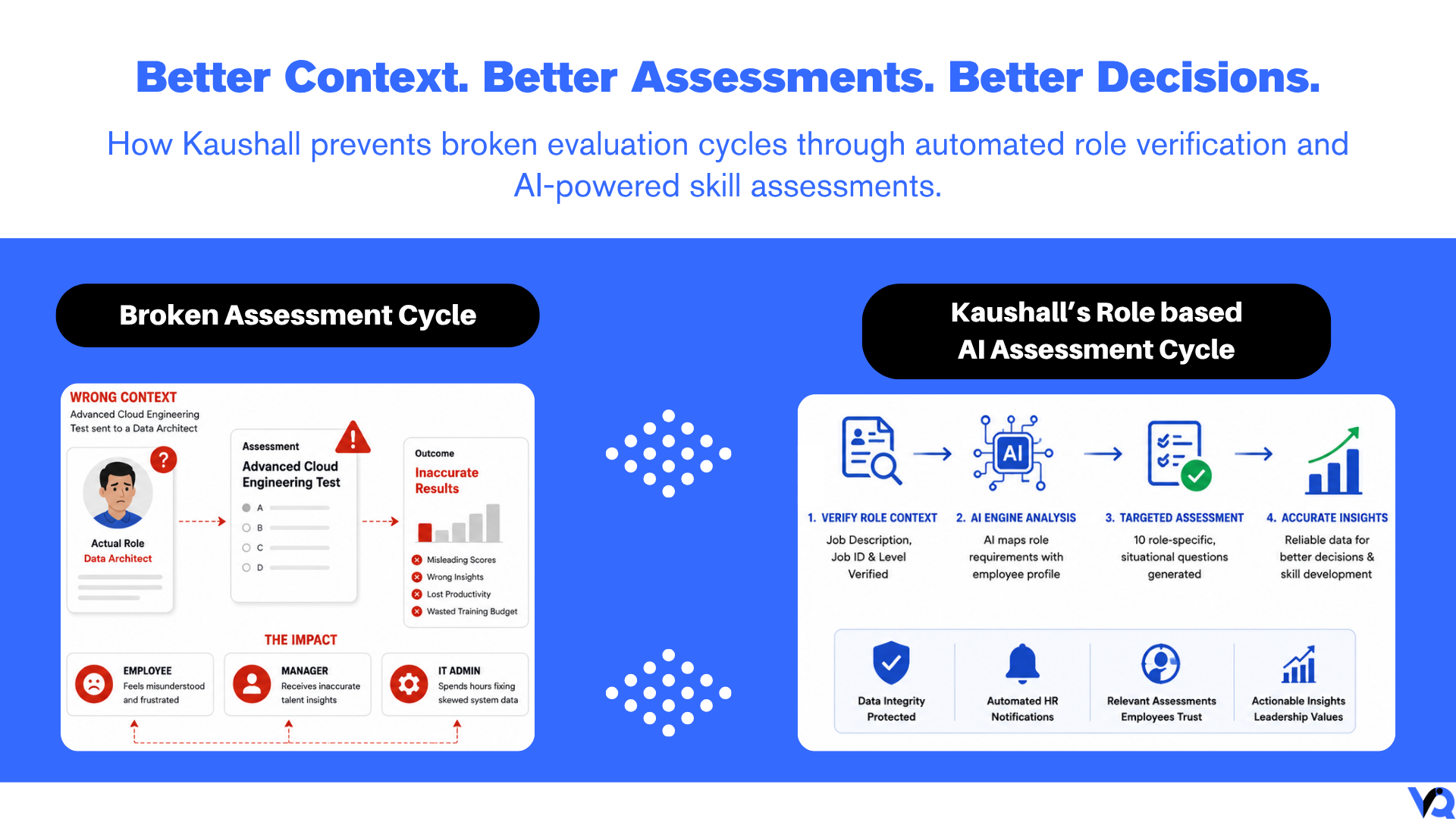
In many enterprises, the evaluation engine is completely disconnected from real-world roles. If a system pushes an advanced cloud engineering test to an employee whose job has shifted toward data architecture, the process breaks down immediately. The employee feels misunderstood, the manager receives inaccurate data, and the IT admin is left troubleshooting skewed system outputs. This is the structural failure of single-input evaluation: pushing assessments without verifying baseline context.
The Expensive Penalty of Unmapped Roles
Operating evaluation programs without a direct link to live job specifications carries severe organizational penalties. When enterprise platforms generate tests based on generic skill tags rather than specific corporate roles, data integrity drops sharply.
This governance and execution crisis is actively draining enterprise resources. According to a long-term human capital study published by McKinsey & Company, approximately 82% of global companies struggle to accurately map internal roles to active skills. This lack of clear visibility means that major corporate training investments are frequently misaligned with daily operational needs.
Compounding this challenge, workplace research from the Society for Human Resource Management (SHRM) indicates that bad data and broken evaluation workflows cost organizations an average of $4,129 per employee in direct administrative friction and lost productivity. When an assessment fails due to missing role requirements, the cycle stalls, lines of business lose faith in HR data, and admins waste valuable hours resetting backend databases.
Why Missing Data Breaks the Evaluation Loop
For legacy systems, a missing job description is an unmanaged exception. Most corporate platforms ignore missing information and generate generic, standardized multiple-choice questions anyway.
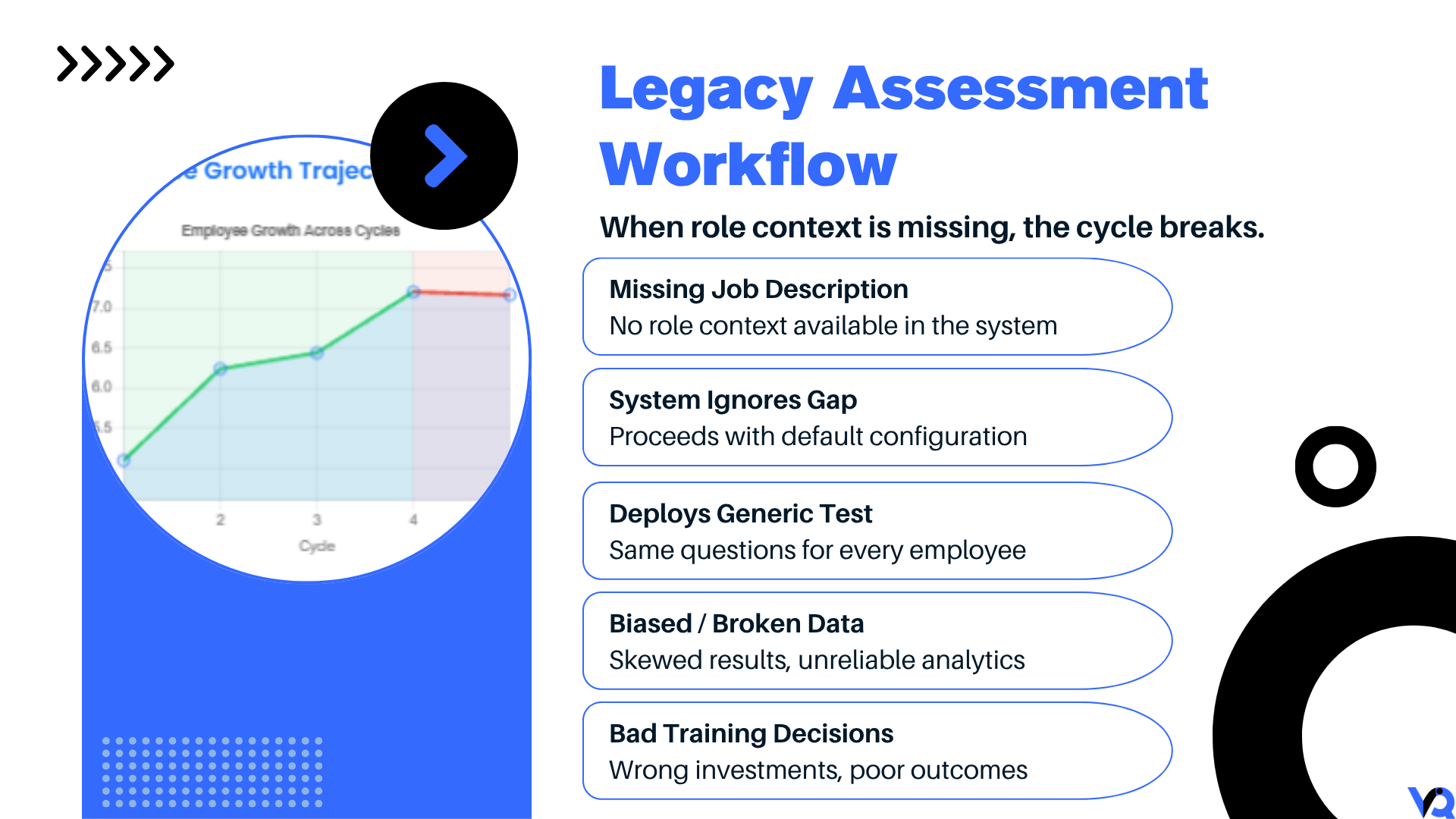
This creates an economic and structural illusion. The platform registers that an assessment cycle was successfully “completed,” but the resulting analytics are completely useless to leadership.
Without explicit job level parameters, a junior technician and a principal architect might receive the exact same evaluation questions. This mismatch produces unreliable talent data, masking real corporate vulnerabilities and rendering future learning investments completely ineffective. To protect data integrity, an enterprise platform must treat missing role context as an absolute system blocker rather than an afterthought.
How Kaushall Enforces Strict Role Governance
Maintaining high-quality talent data requires an evaluation engine that actively protects its own inputs. This is where KAUSHALL, the Human Capital Artificial Intelligence Platform powered by VantageIQ Technologies, introduces built-in structural controls.
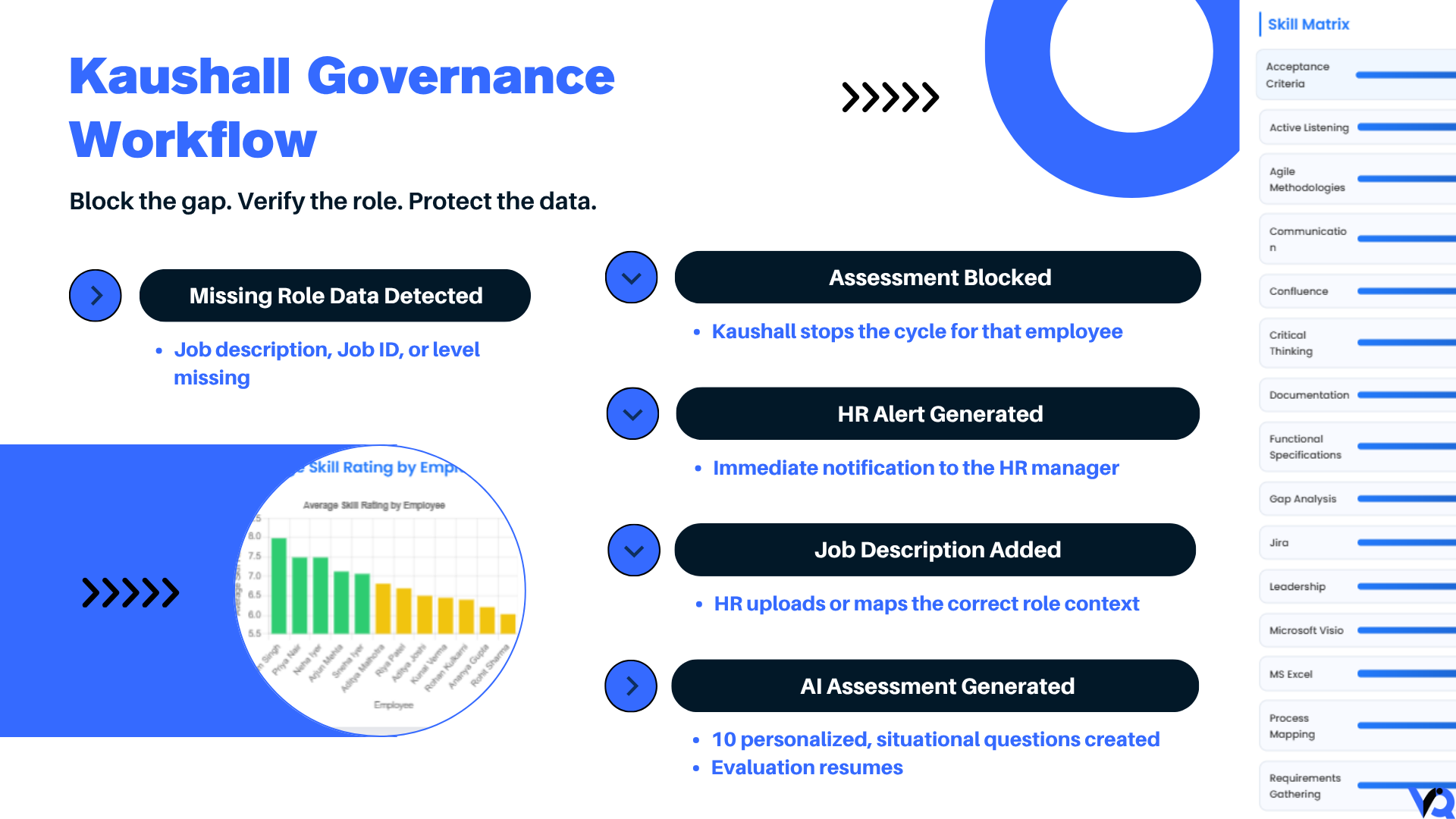
KAUSHALL ensures that no assessment cycle runs blindly. Instead of allowing incomplete or unmapped roles to corrupt your internal skill matrix, the platform enforces an automated, step-by-step verification process:
1. Automated System Blockers
KAUSHALL acts as a strict governance layer. If an employee is scheduled for an evaluation cycle but their profile lacks an assigned job description, Job ID, or operational level, the platform automatically halts the process for that specific employee. This hard barrier prevents the generation of irrelevant questions and protects the integrity of the wider dataset.
2. Immediate HR Notification Triggers
The moment an assessment is blocked due to a missing context block, KAUSHALL does not just sit idle. The platform's automated notification system immediately flags the assigned HR manager. The system prompts the administrator to upload or map the missing job description via the centralized dashboard, ensuring the data gap is resolved right away.
3. Smooth Assessment Resumption
Once the HR manager adds the required job description or maps the structural context, the system instantly processes the new data. KAUSHALL's AI engine ingests the role requirements, cross-references them with the employee’s resume, and immediately generates ten highly targeted, situational questions to resume the evaluation safely.
Shifting from Fragmented Data to Total Governance
Moving from traditional, unverified test engines to an automated, context-aware platform permanently upgrades your internal talent operations:
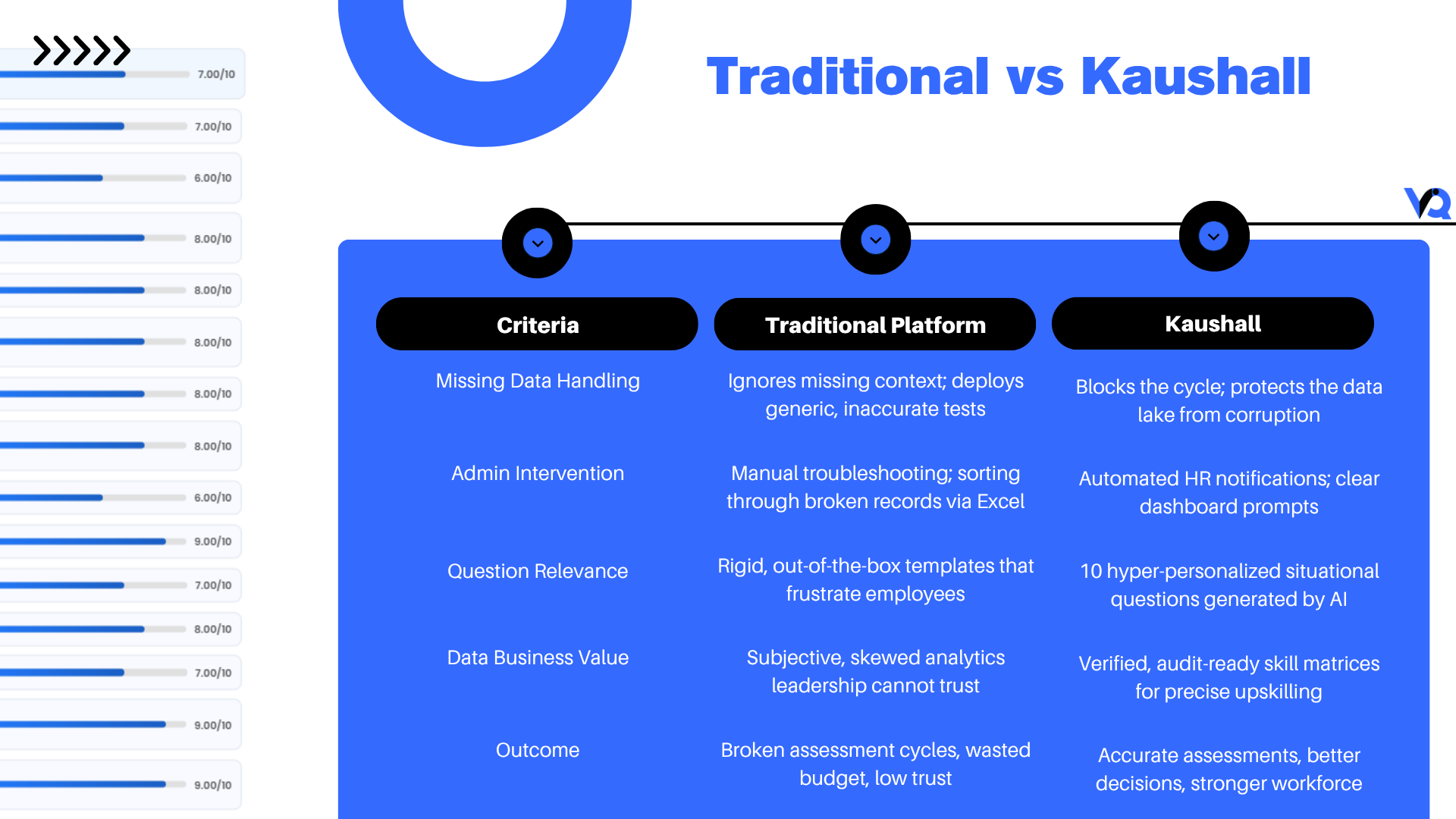
Your workforce assessment program should function as a highly accurate talent radar, not a speculative guessing game. Allowing unmapped roles and missing job descriptions to dilute your organizational metrics leaves your growth strategy vulnerable to execution risks and operational delays.
By leveraging KAUSHALL’s automated governance and context verification workflows, HR Managers and IT Admins can eliminate broken assessment cycles, secure pristine skill data, and confidently build a resilient, high-execution enterprise.
Reference Links & Sources
- McKinsey & Company Performance Research: Taking a Skills-Based Approach to Building the Future Workforce
- SHRM Talent Acquisition Analysis: The True Cost of Administrative Friction and Misaligned Hiring Models
- Gartner Enterprise Governance Benchmarks: Top Strategic Priorities for Human Resource Leaders and IT Operations