Every line item on an enterprise balance sheet is carefully managed, audited, and optimized. Chief Executive Officers (CEOs) track market expansion and product innovation pipelines. Chief Financial Officers (CFOs) implement rigorous cost control measures, maximize capital efficiency, and monitor supply chains. Board members consistently demand clear predictability across every corporate asset.
Yet, a major visibility gap persists at the very core of enterprise execution: human capital.
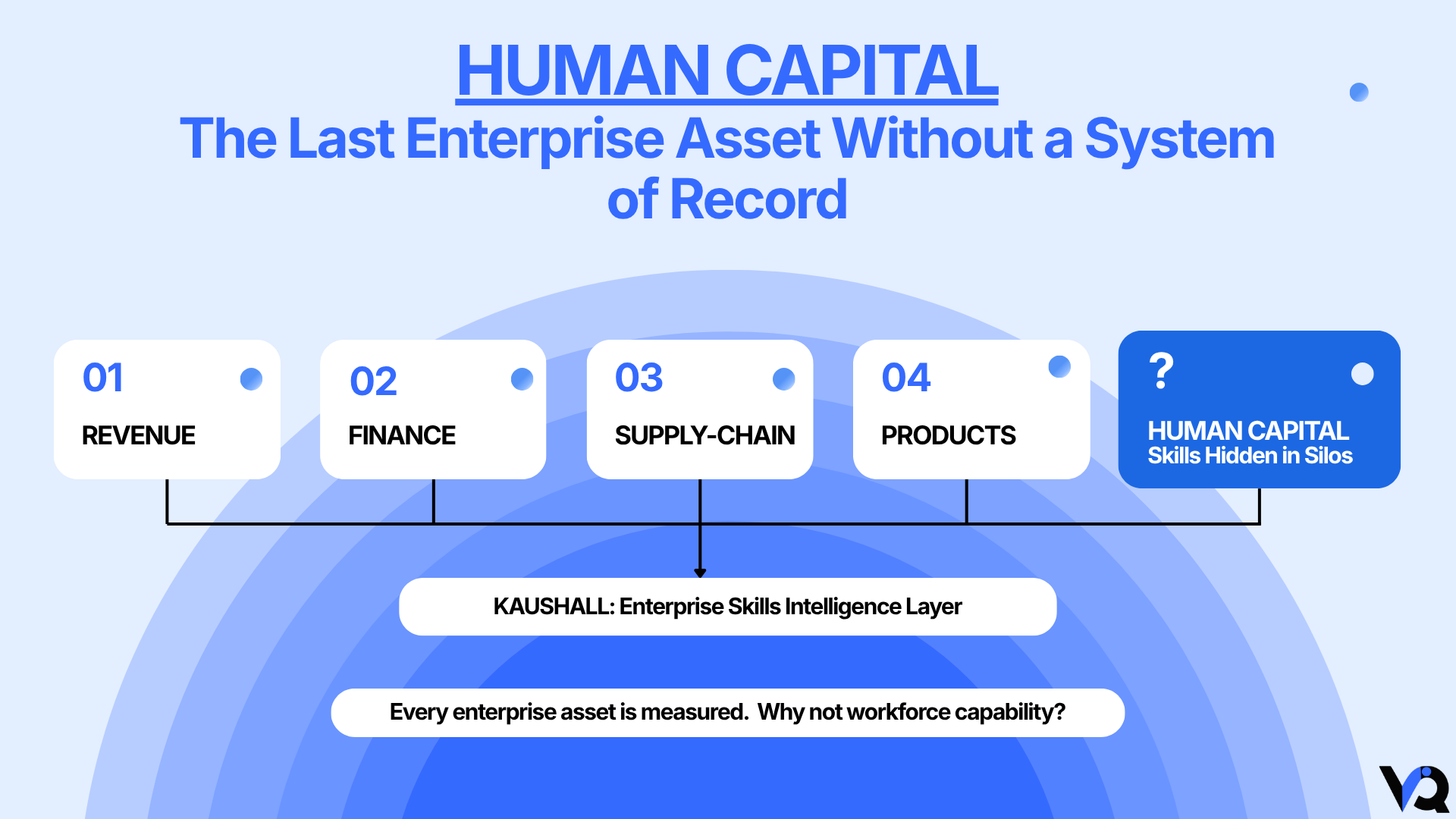
When an executive team launches an artificial intelligence initiative or scales a new product division, they rarely know if they possess the exact internal capabilities required to succeed. Traditional HR tools treat personnel as mere numbers or rigid titles on an organization chart. This lack of deep insight creates substantial operational risks. To achieve sustainable financial performance, enterprise leadership needs a platform that transforms workforce capability from an administrative variable into a clear driver of top and bottom-line growth.
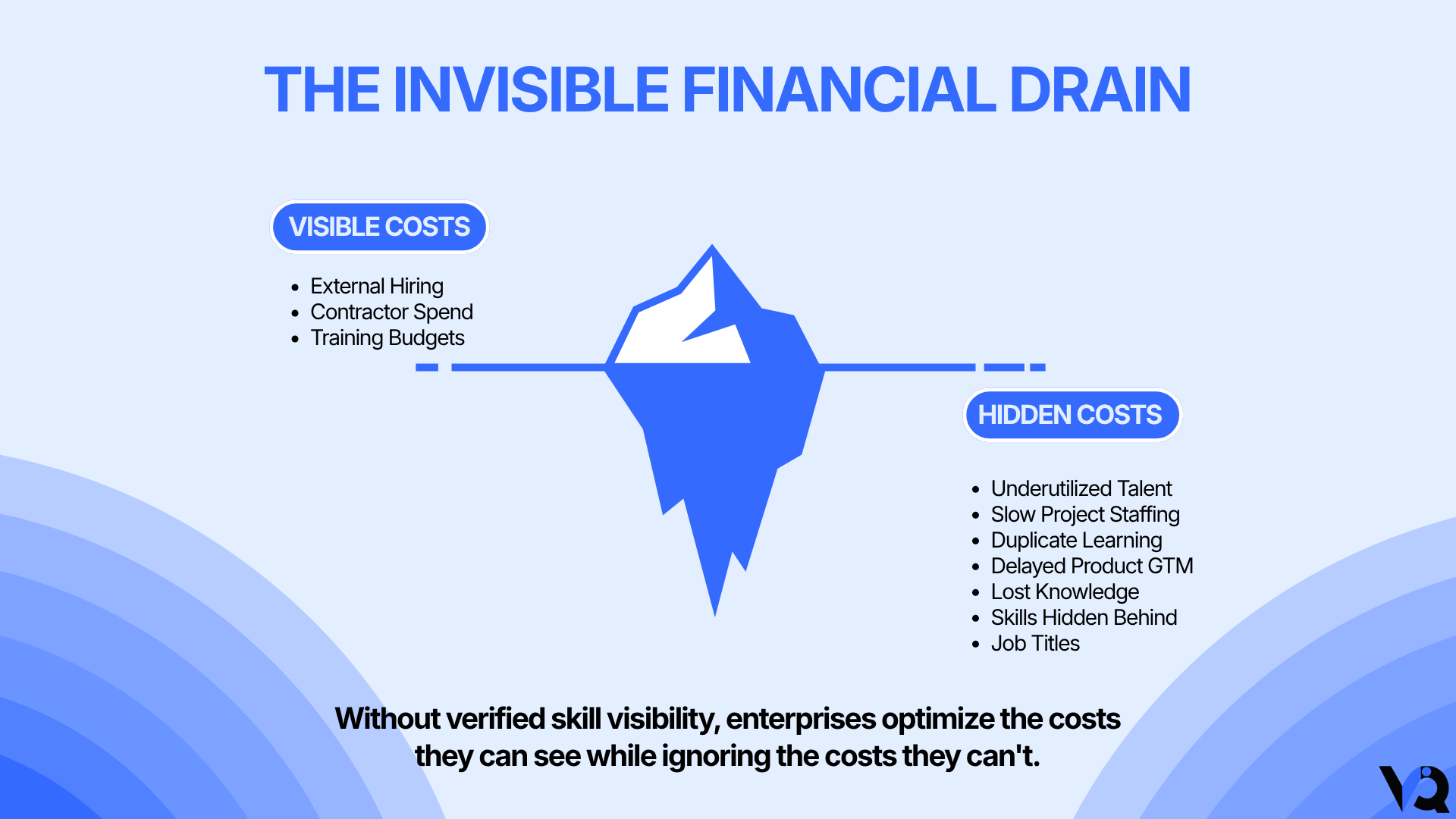
The Invisible Financial Drain of Skewed Talent Data
Managing a global workforce without real-time, validated skill visibility creates a steady financial drain on corporate resources. When companies operate without objective talent data, they default to expensive external recruitment drives, underutilize internal teams, and incur substantial operational friction.
This hidden cost is highly apparent in the modern macroeconomic landscape. According to global research published in the World Economic Forum Future of Jobs Report, a staggering 63% of enterprise employers cite persistent skills gaps as the single largest barrier to successful business transformation. Furthermore, their macro trend analysis reveals that approximately 39% of core workforce capabilities are projected to completely evolve or become entirely outdated over a five-year window, leaving slow-moving organizations highly vulnerable to disruption.
Compounding this agility crisis, comprehensive enterprise data from Deloitte’s Global Human Capital Trends Report highlights a profound organizational execution gap: 70% of business leaders state that speed and adaptability are their primary competitive strategies, yet only 7% believe they are making real progress toward that goal. When a company cannot accurately locate an internal specialist with adjacent technical competencies, it ends up spending an average of several thousand dollars per worker in redundant sourcing fees, temporary contractor premiums, and lost time-to-market momentum.
Moving Beyond Simple Activity Metrics
For decades, human resources leaders relied on vanity metrics to justify people development investments. Executive dashboards were filled with broad activity logs: total training login hours, completed course counts, and subjective manager ratings.
But from a financial standpoint, simple training activity does not guarantee operational readiness.
Recent operational insights from McKinsey’s State of AI Report illustrate the challenges of scaling enterprise innovation. While a dominant 88% of organizations report regular AI usage in at least one business function, only 39% can successfully tie those initiatives to a meaningful EBIT impact at the enterprise level.
The takeaway for the C-suite is clear: running unguided corporate training programs creates an illusion of progress while failing to generate real financial value. True asset optimization only occurs when an enterprise can map its internal talent supply directly to product delivery demands, turning every learning hour into a specific, validated business capability.
Kaushall: The Unified Skills Intelligence Layer
To bridge the gap between human resource operations and financial execution, forward-thinking enterprises use advanced platforms to build a continuous, machine-readable skills inventory.
This is where KAUSHALL transforms enterprise talent architecture. Engineered by VantageIQ Technologies, KAUSHALL acts as a powerful human capital force multiplier, creating a unified skills intelligence layer that aligns daily workforce capabilities directly with long-term business goals.
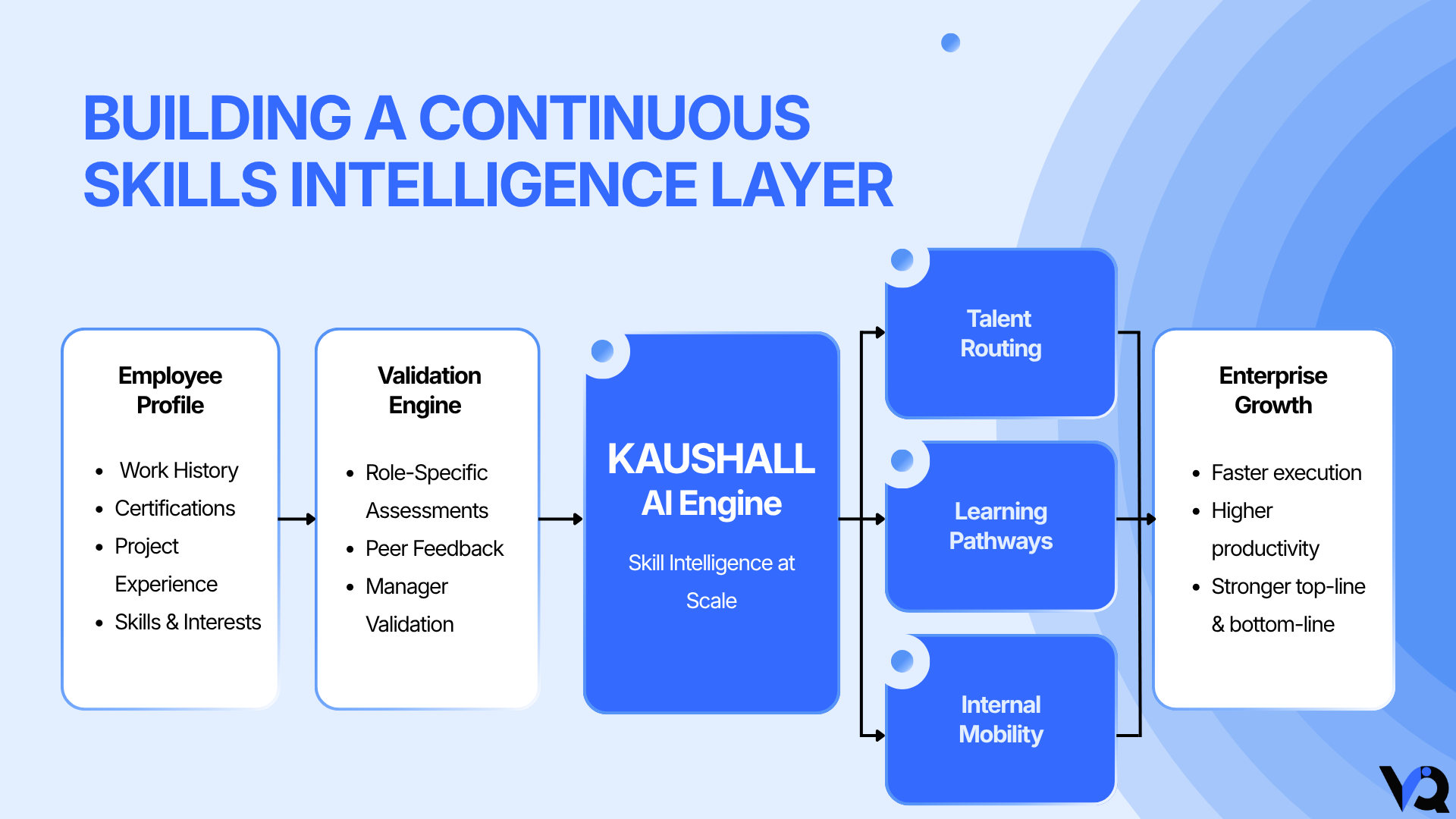
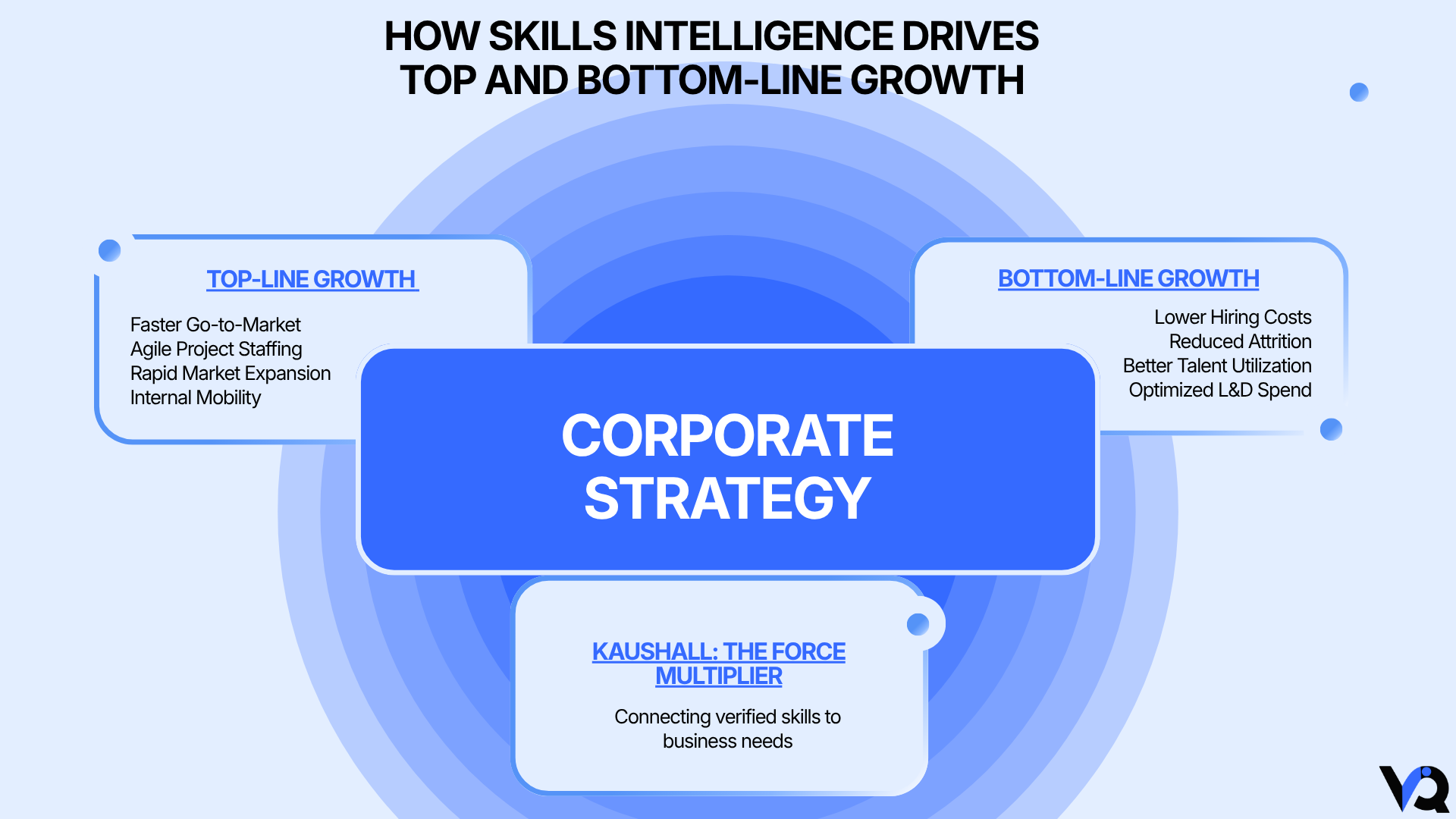
The platform optimizes enterprise financial performance through three key strategic pillars:
1. Driving Top-Line Growth via Dynamic Talent Routing
KAUSHALL gives leadership total visibility into their talent pipelines. When a new market opportunity emerges, executives can immediately search their global workforce by department, team, or specific skill set via an intuitive, dual-layer HR dashboard. By rapidly matching verified internal capabilities to new projects, KAUSHALL accelerates go-to-market timelines and allows organizations to execute major strategic pivots with absolute confidence.
2. Protecting the Bottom Line by Eliminating Sourcing Waste
KAUSHALL replaces speculative external hiring with a structured, multi-source validation engine. By cross-referencing an employee’s historical experience with live job specifications, the platform generates ten deeply tailored, role-relevant situational questions alongside natural language peer and manager reviews. This loop reveals hidden internal talent pools, helping companies significantly lower recruiting spend, reduce reliance on third-party contractors, and minimize expensive incorrect hires.
3. Maximizing Learning and Development Asset Returns
KAUSHALL removes unguided browsing from corporate training libraries. The platform converts individual skill gaps into automated, hyper-personalized course pathways by integrating directly with leading global learning ecosystems like Coursera and Udemy. Progress is continually monitored and re-validated across subsequent assessment cycles, turning corporate upskilling into a highly predictable, data-backed engine for growth.
Changing the Focus of Human Capital Strategy
Transitioning from traditional, legacy human resources planning to an integrated, skills-first talent engine permanently upgrades your financial performance:
| Executive Impact | Legacy Talent Strategy | KAUSHALL Intelligence Layer |
|---|---|---|
| Workforce Visibility | Opaque; capabilities are hidden behind static, rigid job titles. | Clear; real-time searchable skill matrices across teams. |
| Top-Line Advantage | Delayed product launches due to long recruiting cycles. | Accelerated time-to-market through agile internal routing. |
| Bottom-Line Protection | High external hiring costs and significant subscription waste. | Maximized internal talent utilization and optimized training spend. |
| Boardroom Predictability | Unpredictable, gut-based talent deployment decisions. | Data-backed, audit-ready tracking of corporate readiness. |
By deploying KAUSHALL’s unified skills intelligence layer across your enterprise, your leadership team can eliminate operational blind spots, maximize internal talent agility, and confidently unlock the true profit potential of your global workforce.
References
- Deloitte. (2026). Global human capital trends 2026: The adaptability paradox and the skills-first transition. Deloitte Insights.
- McKinsey & Company. (2025). The state of AI in 2025: Agents, innovation, and scaling enterprise value. McKinsey Global Survey Insights.
- World Economic Forum [WEF]. (2025). The future of jobs report 2025: Macroeconomic trends, workforce readiness, and structural transformation. World Economic Forum Publications.