Chief Learning Officers (CLOs) and Chief Financial Officers (CFOs) usually view corporate training through two completely different lenses. A CLO tracks cultural growth, course completion milestones, and employee sentiment. A CFO, however, looks straight at the bottom line, tracking total spend, asset utilization, and the exact financial Return on Investment (ROI).
When an enterprise invests heavily in premium learning content subscriptions, a structural communication gap often emerges.
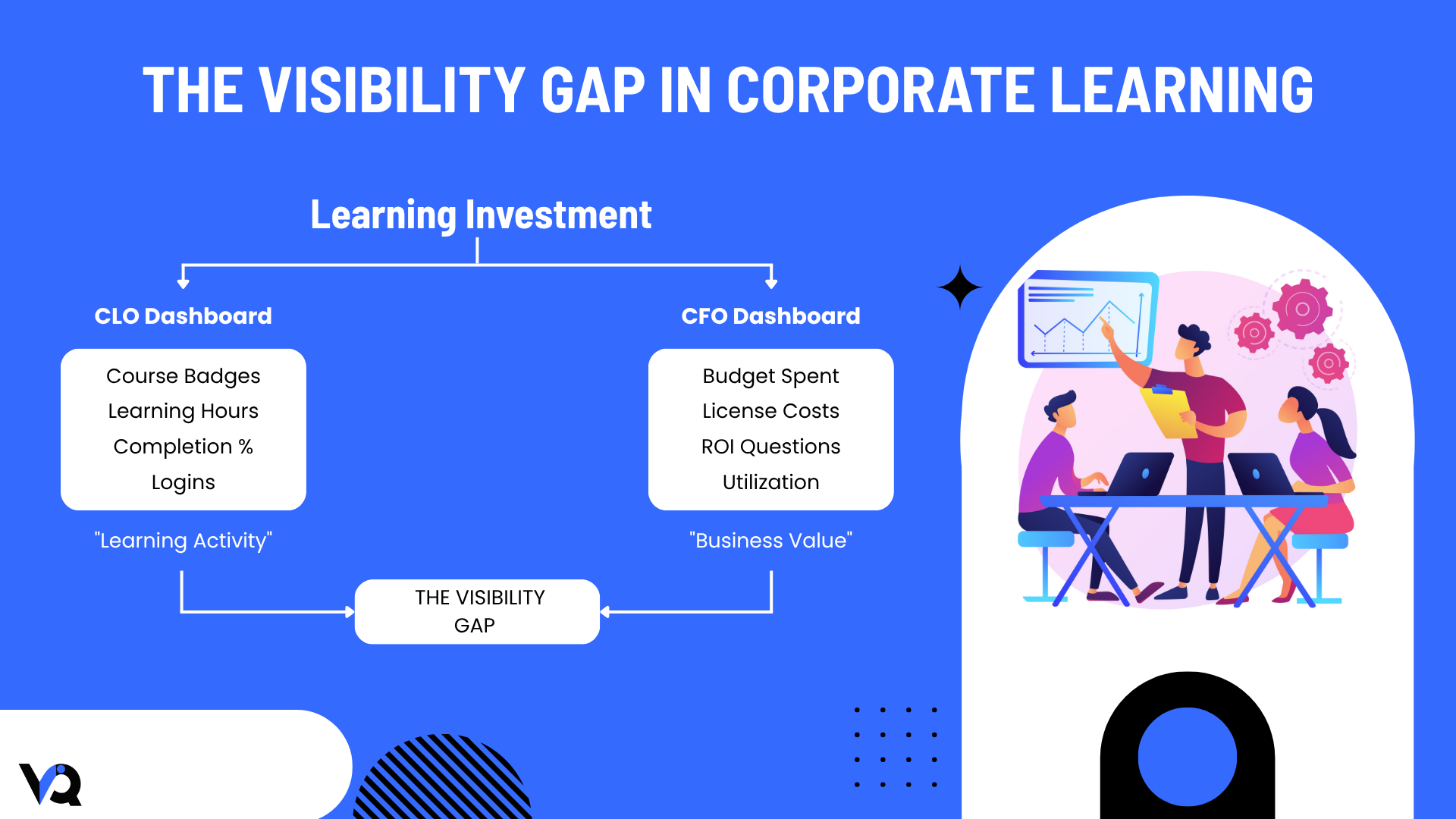
The underlying problem isn't the quality of the educational content. It is a fundamental tracking error: organizations routinely measure seat utilization instead of capability acquisition. To protect your corporate training budget and build a highly responsive, competitive workforce, you must transition away from vague vanity metrics. True, data-backed L&D requires an infrastructure that transforms simple learning hours into clear, measurable business value.
The Expensive Reality of Ghost Subscriptions
Enterprise learning ecosystems are massive, but they are frequently underutilized. Millions of dollars are spent globally on massive, open-ended corporate libraries. However, without a targeted integration layer, a substantial portion of that capital goes entirely to waste.
This tracking and engagement crisis is well-documented. According to macro workplace data compiled in global learning trends reports, while employee desire for advanced AI and technical upskilling remains at an all-time high, enterprise leaders frequently struggle to align seat licenses with active internal roles.
Compounding this problem, financial research published by Gartner highlights that a staggering 46% of enterprise software and SaaS licenses go completely unused over any given 90-day window. In the L&D world, these are known as “ghost subscriptions”—expensive user seats that are paid for annually but rarely logged into after the initial onboarding week.
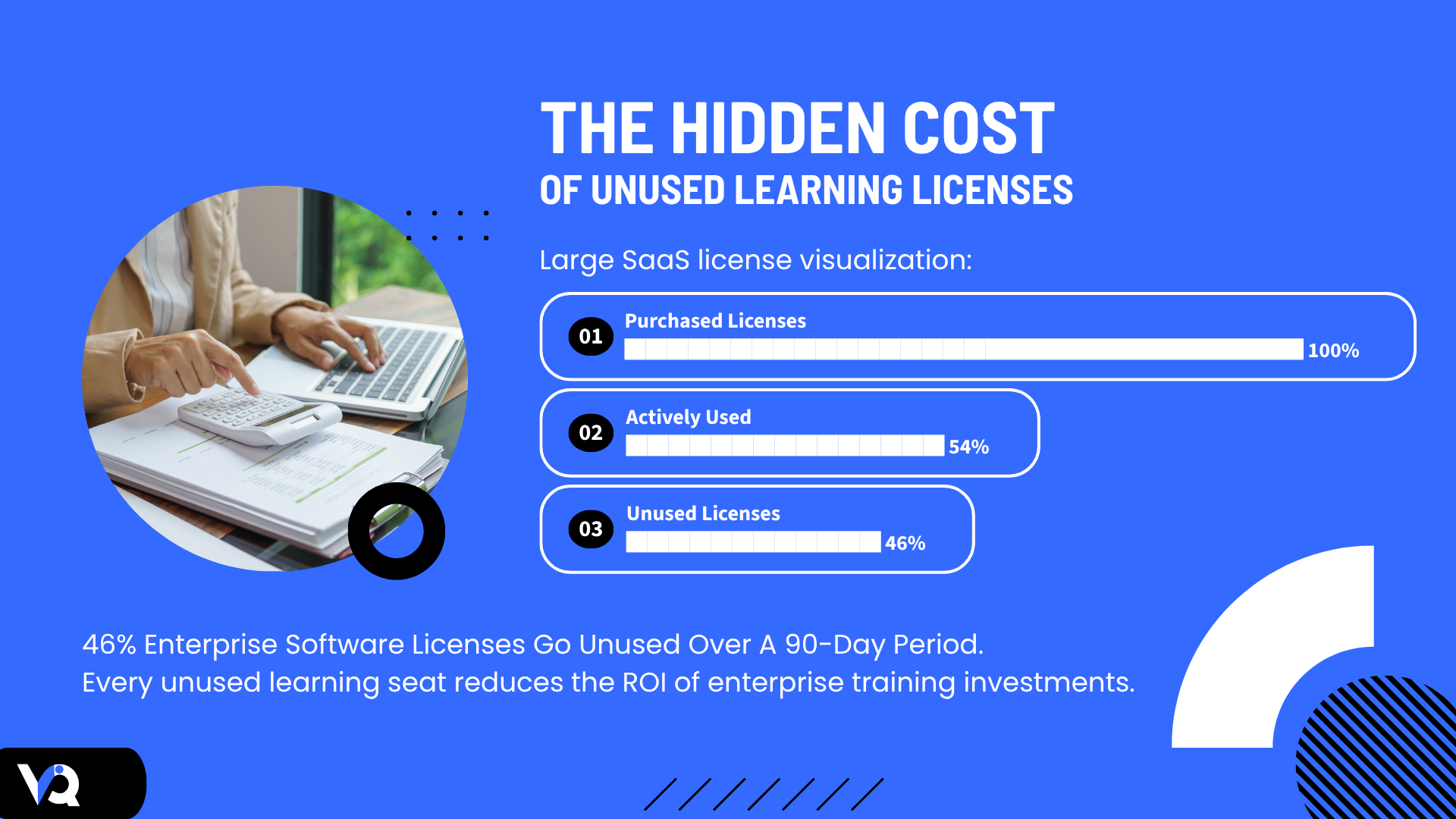
When a CFO looks at a spreadsheet showing low login rates and generalized usage data, it becomes incredibly difficult to justify renewing premium enterprise learning contracts.
Why Completion Rates are an Economic Illusion
For years, HR teams used course completion rates to prove the value of their programs. But from a capital efficiency standpoint, a completed course badge does not equal an operational capability.
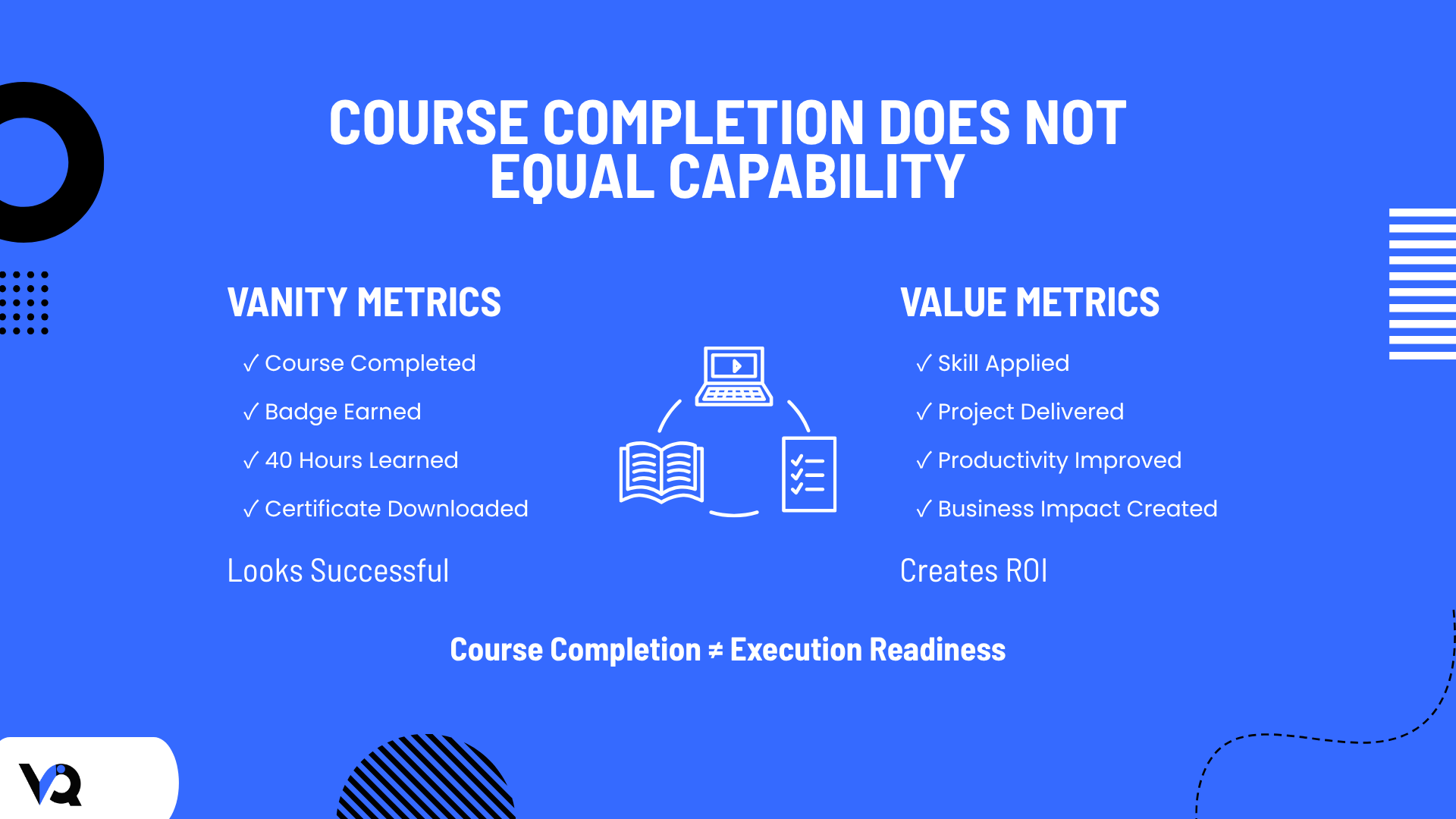
If an enterprise data engineer spends 40 hours completing a python-based machine learning track on an external platform, that milestone looks fantastic on a basic HR dashboard. However, if that engineer returns to their daily routine and never actually deploys a single data model for a live project, the business has gained zero practical utility. The company paid for the license and absorbed 40 hours of lost worker productivity, resulting in a net negative financial return.
A modern skills-based organization needs to tie learning activities directly to specific skill gaps identified by real project demands. The goals of the financial suite and the learning suite only align when an enterprise can systematically prove that a specific course directly fixed a critical, real-world execution bottleneck.
Closing the Loop: How KAUSHALL Quantifies L&D Value
Maximizing the financial return on your enterprise content subscriptions requires moving beyond isolated, third-party user dashboards. You need a centralized platform that turns raw educational courses into an active engine for internal mobility.
This is the exact capability delivered by KAUSHALL, an Human Capital Artificial Intelligence Platform powered by VantageIQ Technologies. KAUSHALL acts as an intelligence and routing layer above your corporate learning subscriptions, connecting every course enrollment directly to an ongoing, validated skills inventory.
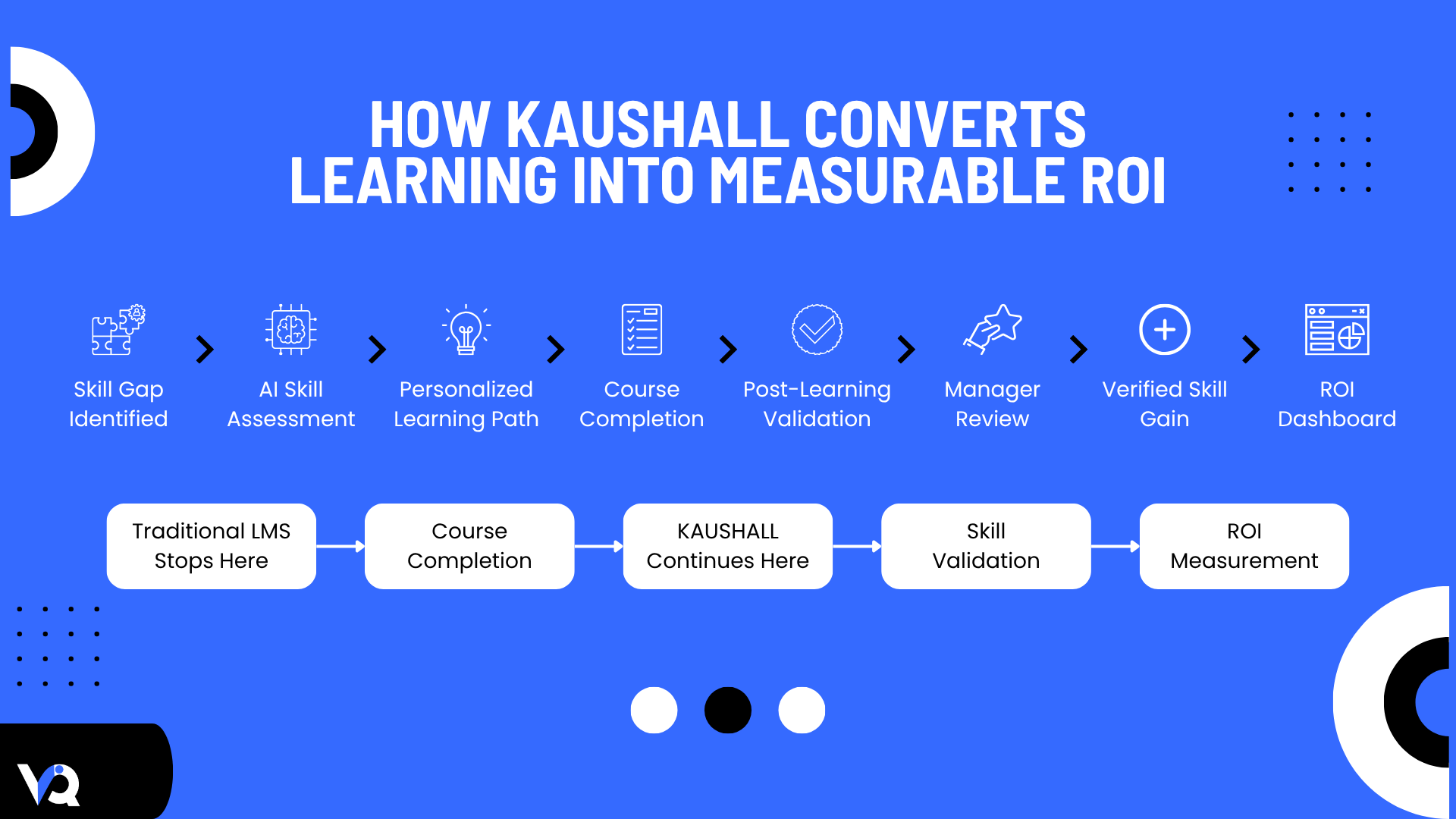
The platform actively optimizes your L&D financial returns through three automated workflows:
1. Intentional, Gap-Driven Course Routing
KAUSHALL removes the guesswork from corporate learning. Instead of asking employees to browse massive, unguided training libraries, the platform pinpoint-targets exact deficiencies using an objective, multi-source evaluation loop. The system automatically cross-references employee skills with project goals, serving hyper-personalized course paths to bridge specific operational gaps.
2. Autonomous Impact Analysis
When an employee finishes an assigned learning track, KAUSHALL does not just register a completion status. The platform initiates a fresh assessment cycle, generating tailored situational questions alongside peer and manager reviews. This loop confirms whether the educational material translated into real-world workspace competence.
3. Financial Optimization and Allocation Dashboards
KAUSHALL gives executive leadership full financial transparency. Through clean analytics dashboards, CFOs and CLOs can cross-reference platform licensing spend against actual, verified skill improvements. Leaders can instantly track precisely which training pipelines are generating execution-ready talent, allowing them to confidently reallocate learning budgets to the highest-performing areas.
The Shift to High-Velocity Corporate Learning
Moving from open-ended, unguided learning libraries to an integrated, data-backed skill pipeline permanently changes your talent architecture:
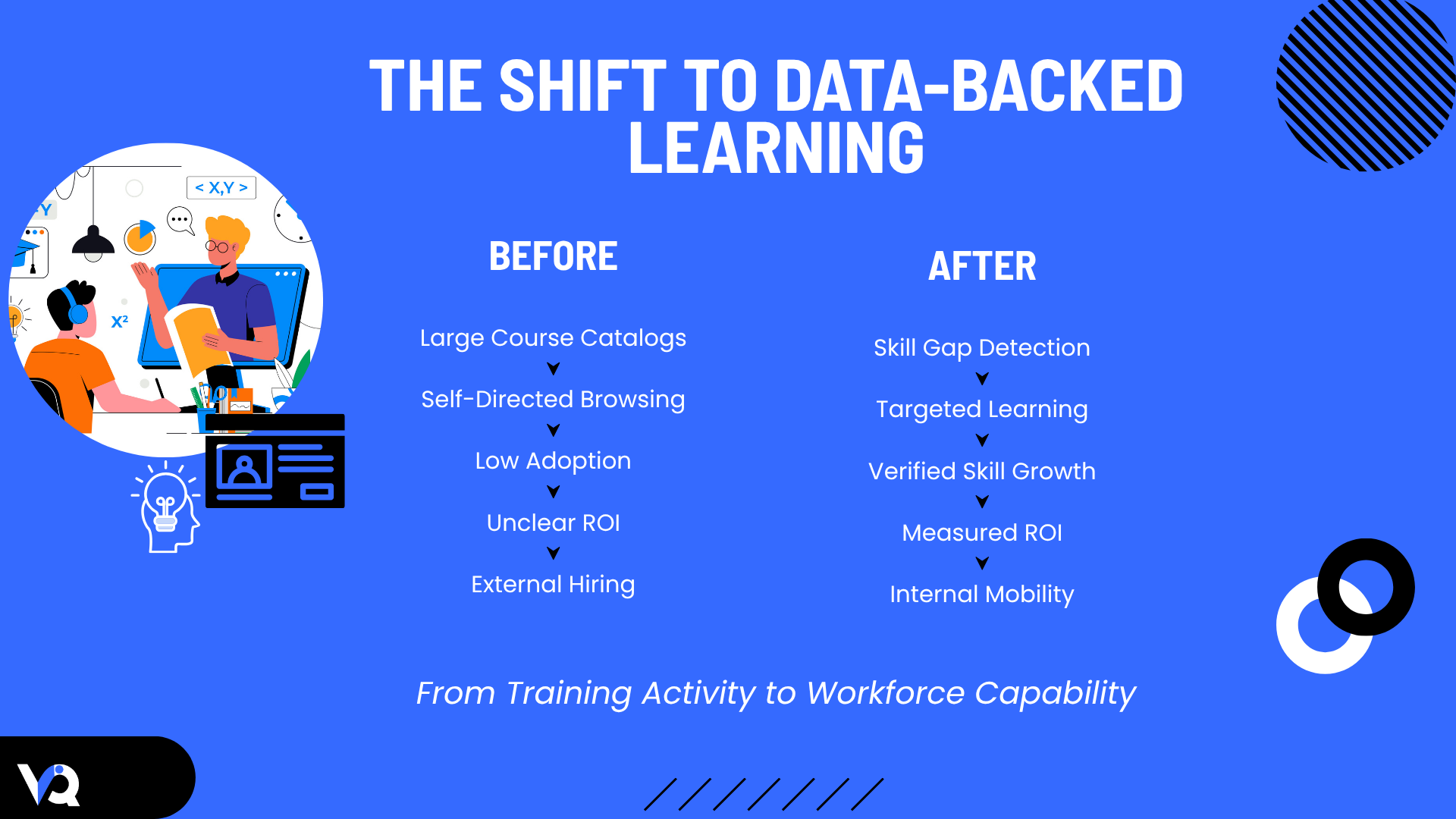
By deploying KAUSHALL’s unified intelligence layer across your organization, your executive leadership can eliminate ghost subscriptions, maximize internal talent agility, and confidently unlock the true financial ROI of your corporate learning ecosystem.
Reference Links & Sources for Strategic Verification
- Udemy Business Insights: Global Learning & Skills Trends Report
- Gartner IT Financial Research: Enterprise Software and SaaS License Utilization and Optimization Benchmarks
- Coursera Executive Analysis: How to Calculate ROI to Maximize Business Returns